


Don’t underestimate your risk of shingles
Over 90% of people over 50 carry the virus that causes shingles.2†
If you’ve had chickenpox, the virus could reactivate at any time. Your risk increases sharply after 50, as your
immune system is less able to keep the virus dormant.1,3
Think being fit and healthy is enough to keep shingles at bay? Think again.
†Not everyone at risk will develop shingles.1
Some underlying medical conditions can increase your risk.1
SHINGLES RISK
In 1 out of 3 people, the dormant Varicella Zoster Virus reactivates and causes shingles1,2. The risk of this happening increases with age, particularly from the age of 50, due to ageing of the immune system3. Those who are immunocompromised due to an underlying disease or treatment and those with chronic conditions are at a further increased risk. Shingles is caused by a virus that you already carry, so you cannot protect yourself by social distancing1.
Individuals with cancer, autoimmune inflammatory conditions, acquired or inherited immune disorders, solid organ and stem cell transplant recipients may be at an increased risk of shingles due to their underlying condition or its treatment. Chronic diseases such as asthma, COPD, diabetes and cardiovascular disease can also increase the risk of shingles. Shingles can have a severe impact on a person’s quality of life, particularly for those who are immunocompromised. It is important to talk to your doctor, pharmacist or practice nurse if you have concerns about your shingles risk.1
Don’t let shingles put your life on hold

$noteContent
Shingles advice
FIND OUT MORE

$noteContent
Talk to your Doctor, Practice Nurse or Pharmacist about shingles
DOWNLOAD SHINGLES LEAFLET

“Shingles? I thought I was too
young. I was wrong. The pain
made me want to rip my skin off.
I really struggled to sleep.
I wouldn’t wish it on anybody.”*
*Inspired by real patient stories. Shingles pain can last weeks or even months.
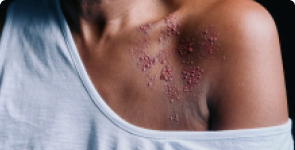
Shingles symptoms may vary among patients.1
Patient portrayal.

“Shingles? It was the worst
experience of my life. There were
these terrible blisters, which felt
like my skin was on fire. I thought
I was too young for shingles.”*
*Inspired by real patient stories. Shingles symptoms may vary among patients.1
Patient portrayal.


“Shingles? I’ve never felt
pain like it, and I’ve had
three kids. Most days I
didn’t leave the house.”*
*Inspired by real patient stories. Shingles pain can last weeks or even months.
Shingles symptoms may vary among patients.1
Patient portrayal.


“Shingles? I thought it was
for older people. It really
slowed my life down."*
*Inspired by real patient stories. Shingles pain can last weeks or even months.
Shingles symptoms may vary among patients.1
Patient portrayal.


“Shingles? I had no idea
someone healthy like me
could get it. It was the
worst experience of my life."*
*Inspired by real patient stories. Shingles pain can last weeks or even months.
Shingles symptoms may vary among patients.1
Patient portrayal.


“Shingles? There were these
terrible blisters. I really
struggled to sleep."*
*Inspired by real patient stories. Shingles pain can last weeks or even months.
Shingles symptoms may vary among patients.1
Patient portrayal.
All images across the webpage are patient portrayals.
References
- Marra F, Parhar K, Huang B, Vadiamudi N. Risk factors for herpes zoster infection: A meta-analysis. Open Forum Infect Dis. 2020;7:ofaa005.
- Harpaz R, Ortega-Sanchez IR, Seward JF. Prevention of herpes zoster: recommendations of the Advisory Committee on Immunization Practices (ACIP). MMWR Recomm Rep. 2008;57(RR-5): 1–30.
- Kawai K et al. BMJ Open. 2014 Jun 10;4(6):e004833. doi: 10.1136/bmjopen-2014-004833
If you experience any side effects while taking a medicinal product, talk to your doctor, pharmacist or nurse. This includes any possible side effects not listed in the package leaflet. Adverse events should be reported directly to the Health Products Regulatory Authority (HPRA) on their website: Reporting Suspected Side Effects (hpra.ie)