
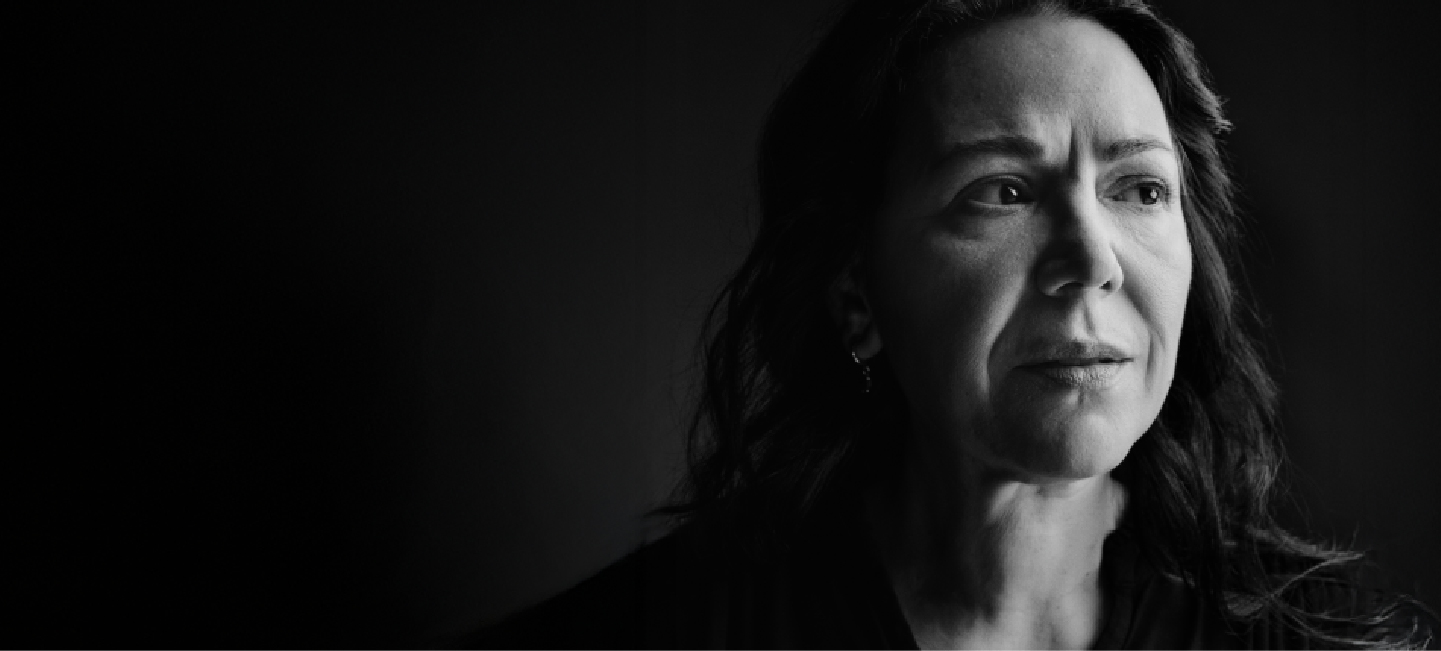

What is shingles?
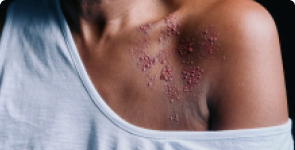
Shingles, or Herpes zoster, is is caused by reactivation of the Varicella Zoster Virus (the same virus that causes Chicken pox). Shingles typically presents as an itchy, blistering rash. This rash appears either on the right or left side of the body, not crossing the middle. It can develop on your torso or head (including eyes), most commonly appearing on the chest or abdomen.1
People have described shingles pain as burning, stabbing or shock-like. It can disrupt your life, affecting daily activities like getting dressed, walking and sleeping.1,2
Along with the rash and pain, you could also experience sensitivity to light and touch, headache and not feeling well.1
What you need to know about shingles
-
 What are the typical symptoms?
 The first signs of shingles can be a tingling or painful feeling in an area of skin, a headache or feeling generally unwell. Typically, a blistering rash may appear a few days later on one side of the body only.3 Usually, you get the shingles rash on your chest and abdomen, but it can appear anywhere on your body including on your face.3 It can take up to 4 weeks for the rash to heal. Your skin can be painful for weeks after the rash has gone, but it usually gets better over time.3 If you are experiencing any of these symptoms, please speak with your pharmacist, doctor or practice nurse.
-
What causes shingles?
Shingles is caused by the reactivation of the same virus that causes chickenpox, the varicella zoster virus.1 90% of people over 50 carry this virus, which can reactivate at any time.1,4†
Your immune system keeps the virus dormant in your body. Unfortunately, our immunity weakens with age, allowing the virus to reactivate and cause shingles.1
1 in 3 adults develop shingles during their lifetime.1†Not everyone at risk will develop shingles.1
-
How long does shingles last?
While the rash usually heals in a few weeks, you could experience complications such as nerve pain that can last months and in some cases even years.1
-
Why am I at higher risk after 50?
Your risk of shingles rises more sharply after 50, as your immune system is less able to keep the virus dormant.1,5 Some underlying medical conditions and treatments can also weaken the immune system, increasing your risk.1
-
How would shingles affect me?
Shingles can interfere with your life in many ways, such as interrupting your sleep, impacting your ability to move, causing stress and anxiety, and affecting your work.2
Even more, it can impact your relationships with family and friends,2 and potentially cause you to miss important life moments.
-
Is shingles contagious?
Shingles happens when the varicella zoster virus that’s already in your body reactivates, so it can’t be passed on from one person to another.1
However, since the virus that causes shingles and chickenpox is the same, a person who has never had chickenpox or isn’t protected against it, may get chickenpox if they come in direct contact with the blisters of someone who has shingles.1 If you have shingles it is important to avoid coming into contact with pregnant women who have never had chickenpox before, immunocompromised patients and babies less than 1 month old – unless it’s your own baby.” 3
-
Am I still at risk if I haven't had chickenpox?
If you’ve never had chickenpox, you are not at risk of shingles but remain at risk of chickenpox. However, you may have been exposed to the virus without knowing, or you may not remember having chickenpox, which means you may be at risk of developing shingles.
You cannot get shingles from someone with shingles or chickenpox. But you can get chickenpox from someone with shingles if you haven't had chickenpox before.3
-
Can I get shingles more than once?
It is not common for shingles to occur more than once, but it can happen. Recurrence is more likely if you are immunocompromised.
Don’t underestimate shingles
Shingles pain can be excruciating. It can feel like burning, stabbing or shock-like. The pain can make even simple daily tasks challenging.1,4

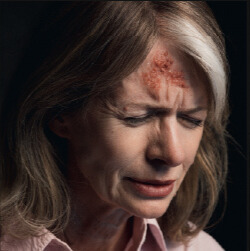


Don’t let shingles put your life on hold

$noteContent
Are you at risk of shingles?
CHECK YOUR RISK HERE

$noteContent
Talk to your Doctor, Practice Nurse or Pharmacist about shingles
DOWNLOAD SHINGLES LEAFLET

“Shingles? I thought I was too
young. I was wrong. The pain
made me want to rip my skin off.
I really struggled to sleep.
I wouldn’t wish it on anybody.”*
*Inspired by real patient stories. Shingles pain can last weeks or even months.
Shingles symptoms may vary among patients.1
Patient portrayal.

“Shingles? It was the worst
experience of my life. There were
these terrible blisters, which felt
like my skin was on fire. I thought
I was too young for shingles.”*
*Inspired by real patient stories. Shingles symptoms may vary among patients.1
Patient portrayal.


“Shingles? I’ve never felt
pain like it, and I’ve had
three kids. Most days I
didn’t leave the house.”*
*Inspired by real patient stories. Shingles pain can last weeks or even months.
Shingles symptoms may vary among patients.1
Patient portrayal.


“Shingles? I thought it was
for older people. It really
slowed my life down."*
*Inspired by real patient stories. Shingles pain can last weeks or even months.
Shingles symptoms may vary among patients.1
Patient portrayal.


“Shingles? I had no idea
someone healthy like me
could get it. It was the
worst experience of my life."*
*Inspired by real patient stories. Shingles pain can last weeks or even months.
Shingles symptoms may vary among patients.1
Patient portrayal.


“Shingles? There were these
terrible blisters. I really
struggled to sleep."*
*Inspired by real patient stories. Shingles pain can last weeks or even months.
Shingles symptoms may vary among patients.1
Patient portrayal.
All images across the webpage are patient portrayals.
References
- Harpaz R, Ortega-Sanchez IR, Seward JF. Prevention of herpes zoster: recommendations of the Advisory Committee on Immunization Practices (ACIP). MMWR Recomm Rep. 2008;57(RR-5):1–30.
- Weinke T, Edte A, Schmitt S, Lukas K. Impact of herpes zoster and post-herpetic neuralgia on patients’ quality of life: a patient-reported outcomes survey. Z Gesundh Wiss. 2010;18:367–374.
- HSE advice on shingles Shingles: symptoms, causes, diagnosis and treatments - HSE.ie last accessed August 2025.
- Bollaerts K, Riera-Montes M, Heininger U, et al. A systematic review of varicella seroprevalence in European countries before universal childhood immunization: deriving incidence from seroprevalence data. Epidemiol Infect. 2017;145:2666–2677.
- Kawai K et al. BMJ Open. 2014 Jun 10;4(6):e004833. doi: 10.1136/bmjopen-2014-004833
- Lee C, Giannelos N, Curran D, et al. Lifetime risk of herpes zoster in the population of Beijing, China. Public Health Pract (Oxf). 2023;5:100356.
- Södergren E, Mårdberg K, Nishimwe M, et al. Incidence and burden of herpes zoster in Sweden: a regional population-based register study. Infect Dis Ther. 2024;13(1):121–140.
- Hales CM, Harpaz R, Ortega-Sanchez I, Bialek SR. Update on recommendations for use of herpes zoster vaccine. MMWR Morb Mortal Wkly Rep. 2014;63(33):729–731.
If you experience any side effects while taking a medicinal product, talk to your doctor, pharmacist or nurse. This includes any possible side effects not listed in the package leaflet. Adverse events should be reported directly to the Health Products Regulatory Authority (HPRA) on their website: Reporting Suspected Side Effects (hpra.ie)